
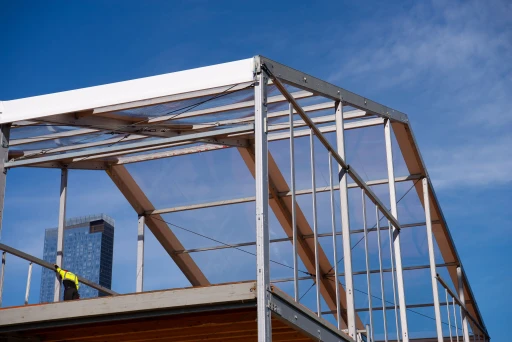
Hire the wrong frame crew and you’ll find out late. The walls are up, the inspector is frowning, and the fix means tearing things apart. Most of that is avoidable. Start with one of the better steel framing contractors, especially if your plan calls for structural steel framing, and you’ll skip the usual headaches.
This guide covers what you’re paying for, where steel beats wood, and what to ask before you sign anything.
So What Are You Actually Paying For?
Steel framing swaps wood studs and joists for steel ones. That’s the whole idea. The steel carries the weight of your floors, walls, and roof, and everything else hangs off it.
Two types show up on most jobs. Light gauge is the thin, cold-formed steel you’ll find in interior walls and smaller builds. Heavy beams and columns are a different animal. Structural steel framing handles the big loads, which is why it turns up in larger buildings, open floor plans, and anything with long spans between supports.
Why Steel Keeps Winning on Tricky Projects
Wood has its fans. For a small, simple house, it can be the smarter buy.
But steel earns its spot once a project gets ambitious. Termites can’t touch it. Moisture won’t make it swell or rot. A steel stud that’s straight on delivery day is still straight a year later, and that saves your drywall crew a lot of grumbling.
Steel framing also doesn’t burn, which counts for something when you’re building anywhere near dry brush.
Steel vs. Wood, Side by Side
| Factor | Steel Framing | Wood Framing |
| Strength for its weight | Very high | Moderate |
| Pests and rot | Rarely an issue | Real risk |
| Fire | Won’t ignite | Burns |
| Upfront material cost | Often higher | Often lower |
| Long open spans | Handles them well | Needs extra support |
| Warping and shrinking | Stays put | Can move over time |
The price gap is the catch. Steel can cost more upfront, so run the numbers on upkeep and repairs too, not just the lumber bill.
What a Good Crew Does Before Touching a Beam
Hanging steel is the part you can see. The real work starts earlier.
A solid contractor reads your drawings line by line and flags conflicts before any material gets ordered. Then comes the cutting, welding, bolting, and leveling, all done to the engineer’s specs. After that they deal with inspectors, which is its own sport. Cleanup comes last, and you’d be surprised how many crews treat it as optional.
When one team owns that whole chain, fewer things fall through the cracks.
Five Questions That Separate Pros From Pretenders
- Can I see your license and insurance? Ask for both. Then look up the license yourself with the Contractors State License Board. Two minutes, no excuses.
- Who does the welding, and who checks it? Connections are where frames succeed or fail. You want a clear answer, not a shrug.
- Have you built something like mine? A crew that frames houses all day may not be your best bet for a big commercial structure. The reverse is true too.
- What’s in the quote, and what isn’t? Get materials, labor, timeline, and exclusions in writing. Vague quotes grow into surprise bills.
- How fast do you answer? If replies are slow now, they won’t speed up when the job gets stressful.
Mistakes That Cost Real Money
- Picking the lowest bid. It often leaves something out, and you pay for it later.
- Skipping the engineer. Steel needs proper design. Guessing isn’t a plan.
- Ignoring local code. Rules change by city, and inspectors will check every one.
- Squeezing the schedule. Good framing takes planning. Rush it and quality slips first.
Conclusion
Here’s my honest take. The material matters less than the people handling it. A great crew can make average steel work, while a sloppy one will wreck the best frame on the market.
So put your energy into vetting, not into haggling over a few dollars an hour. If you’re building in Los Angeles, Snow Construction does steel framing work and is worth a call before you lock anything in.
Ask hard questions. Get everything in writing.
FAQs
How long does steel framing take?
It depends on size and design. A small structure might take a few weeks, and a bigger building can run several months. Ask for the timeline in writing.
Is steel framing pricier than wood?
Often, yes, at least on materials. Fewer pest problems, less warping, and quicker assembly can close the gap over time.
Can I use steel framing in a house?
You can. Light gauge steel is common in home walls and additions, and structural steel shows up in homes with wide openings or big windows.
Do I need an engineer for structural steel framing?
Yes. Structural steel framing needs engineered drawings so the frame carries its loads safely and passes inspection.
What should I ask steel framing contractors before hiring?
Ask about licensing, insurance, similar past projects, timelines, and who handles inspections. Request a written scope too.