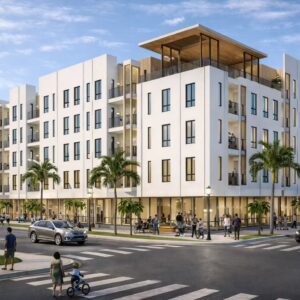
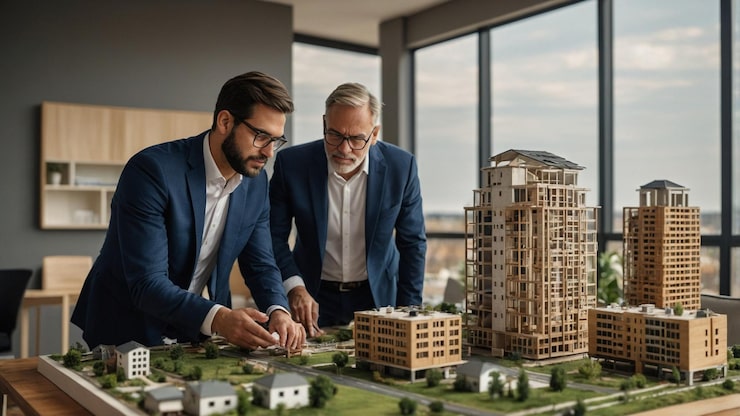
Workforce housing has become an important topic for real estate developers, investors, employers, and public agencies. In many communities, the cost of housing creates challenges for working households seeking homes near their jobs and essential services. At the same time, developers must manage rising construction expenses, financing requirements, land costs, and regulatory approvals.
Addressing these challenges requires an understanding of both housing demand and real estate economics. Andrew Avi Greenbaum, CEO of Triple Double, works in real estate development and investment, with a focus that includes workforce and affordable housing. His background combines residential and commercial property experience with academic research on workforce housing.
Through Triple Double, Greenbaum’s work also connects housing development with concrete panelized modular construction. This approach offers another area for developers and investors to examine when evaluating how housing projects are designed, financed, and delivered.
Who Is Andrew Avi Greenbaum?
Andrew Avi Greenbaum, also known as Avi Greenbaum, is a real estate executive and entrepreneur with more than 20 years of experience in the property sector. His reported experience includes buying or building more than 8,000 residential units and over 12 million square feet of commercial space.
He leads Triple Double, a real estate development and management platform focused on several property categories. These include workforce and affordable housing, medical and commercial office properties, residential conversions, and concrete panelized modular construction for workforce housing.
His professional background also includes entrepreneurship outside real estate. He co-founded Foundation Source, which became the largest administrator of private charitable foundations in the United States and was later sold for more than $110 million. He also founded Spectrum Capital Partners, a proprietary trading firm that grew to 200 employees.
This experience provides context for his broader business career and his current role in real estate development.
What Makes Workforce Housing Different?
Workforce housing generally refers to housing intended for working households that may find conventional market-rate homes difficult to afford in their local communities. The exact definition varies by location, household income, and applicable housing programs.
Unlike developments focused exclusively on higher-income buyers or renters, workforce housing must account for the financial circumstances of its intended residents. Developers need to understand what households can reasonably afford while ensuring that the project can cover its development and operating costs.
Several factors influence this balance.
Land and Location
Land acquisition can represent a substantial portion of a development budget. Sites near employment centers, public transportation, schools, and essential services may be attractive for workforce housing, but these locations can also carry higher costs.
Developers must assess whether a site’s location, purchase price, zoning, and infrastructure support the intended project.
Construction Costs
Materials, labor, equipment, site preparation, and professional services all contribute to development expenses. Delays and changes in material prices can further affect the budget.
For workforce housing, cost control is particularly important because excessive development expenses may make it difficult to offer homes at suitable price points.
Financing and Operations
Housing projects may require a combination of debt, equity, and, where applicable, public-sector participation. Financing terms influence the project’s costs and financial flexibility.
After construction, maintenance, insurance, taxes, utilities, and property management continue to affect financial performance. Developers must consider these expenses from the beginning rather than focusing only on construction.
Why Construction Methods Matter for Housing Affordability
Construction methods can influence project budgets, schedules, and the coordination of labor and materials. As developers examine ways to deliver housing, off-site manufacturing is one approach worth evaluating.
Triple Double operates a concrete panelized modular manufacturing platform for workforce housing. Panelized construction involves producing building components in a manufacturing environment and transporting them to the site for assembly.
Depending on the project, this method may allow some manufacturing activities to take place while site preparation continues. It may also support repeatable production processes when similar designs and specifications are used.
However, the benefits are not automatic. Manufacturing costs, transportation, installation, site conditions, production capacity, and local building requirements all influence the final result.
Developers should compare the total cost and expected schedule of panelized construction with other suitable approaches before deciding whether it offers a practical advantage.
How Concrete Panelized Construction May Support Development Planning
A manufacturing-based construction process can change how a development team organizes its work.
Coordinating Manufacturing and Site Work
When components are produced away from the site, manufacturing and site preparation may be coordinated to take place during overlapping periods. This can create scheduling opportunities when the design is complete and the site is ready.
However, delays in permits, foundations, deliveries, or installation can still affect the overall schedule. Careful planning is necessary to coordinate every stage.
Standardizing Building Components
Repeated designs may create opportunities for consistent manufacturing processes. Standardization can help organize production and quality checks, provided that the components meet the requirements of the specific building.
Workforce housing projects may benefit from evaluating whether suitable designs can be repeated across multiple developments. The practicality of this approach depends on project scale, local conditions, and the needs of residents.
Managing Quality
Manufacturing components in a controlled environment may allow inspections to take place before delivery. Appropriate specifications, quality-control procedures, and compliance checks remain essential.
The completed building must also meet applicable structural, fire safety, accessibility, and other building requirements.
Andrew Avi Greenbaum’s Academic Interest in Workforce Housing
Greenbaum completed a Doctor of Business Administration at Florida International University in 2026, with a dissertation focused on workforce housing. He also holds a Juris Doctor from Brooklyn Law School and a Bachelor of Arts from Yeshiva University.
His doctoral research connects with an area of focus within Triple Double’s real estate activities.
Workforce housing research can examine the relationship between housing supply, development costs, household incomes, construction methods, and financing structures. These factors influence whether projects can deliver homes that meet local needs at attainable prices.
Academic research can help organize questions and evaluate assumptions. Developers must also consider current market data, property conditions, regulatory requirements, and project-specific financial information when making decisions.
The Role of Public and Private Partnerships
Workforce housing projects may involve private investors, lenders, municipalities, housing agencies, employers, and development partners.
Each participant brings different priorities. Investors may focus on financial feasibility and risk, while public agencies may prioritize housing availability, affordability, land use, and community needs.
A successful partnership requires clear responsibilities and a shared understanding of the project’s objectives.
Partners should agree on the intended residents, development budget, financing structure, required approvals, construction responsibilities, and long-term property management arrangements.
Where affordability restrictions or public funding conditions apply, these requirements should be incorporated into the project’s financial and operational planning.
Evaluating Workforce Housing Opportunities
Organizations considering workforce housing projects can use a structured evaluation process.
- Study local demand. Review rental prices, household incomes, employment patterns, and housing availability.
- Define the target residents. Establish which households the development is intended to serve.
- Assess the site. Examine land costs, zoning, infrastructure, and access to employment and essential services.
- Prepare a realistic budget. Include construction, financing, professional fees, contingency allowances, and operating expenses.
- Compare construction methods. Evaluate whether conventional construction or panelized construction better fits the project’s requirements.
- Review financing options. Consider capital requirements, loan terms, and any applicable public-sector programs.
- Plan for long-term operations. Account for maintenance, property management, resident needs, and ongoing affordability obligations.
This process helps decision-makers understand whether a project can meet its objectives while remaining financially and operationally practical.
What Investors Should Know About Development Risk
Workforce housing can address an important community need, but it remains subject to real estate development risks. Construction expenses may increase, financing conditions may change, and local demand may differ from initial expectations.
Investors should examine the assumptions behind projected costs and income, review required approvals, and assess the capabilities of the project team. They should also consider what happens if construction takes longer than planned or operating expenses exceed expectations.
A developer’s experience can provide useful context, but every project requires independent due diligence. Financial models, legal documents, construction plans, and market research should support the investment decision.
Conclusion
Workforce housing requires developers to balance affordability, construction costs, financing, and long-term property management. Meeting these challenges calls for careful planning and coordination among private capital partners, public agencies, construction teams, and housing providers.
Andrew Avi Greenbaum’s leadership of Triple Double connects workforce and affordable housing with broader real estate development activities and a concrete panelized modular manufacturing platform. His academic work on workforce housing provides additional context for this area of focus.
For investors, municipalities, and development partners, the most important step is to evaluate each opportunity using realistic financial assumptions, local market evidence, and a clear understanding of project risks. Suitable construction methods and effective coordination may help support housing delivery, but the results ultimately depend on project-specific conditions and execution.